
Choosing a manufacturer is different from placing an order. An order tests one shipment. A manufacturer partnership tests whether the same quality, the same timelines and the same communication will hold across seasons, batches and growth — for dresses where a scratchy seam or a missed event date is not a small error, but a lost customer.
This guide helps a boutique choose a Vietnam girls dress manufacturer for boutiques as a long-term partner: how to evaluate occasionwear quality, whether a ready catalog or custom production fits the boutique, whether repeat orders will be reliable, how tier growth works, and what the true landed cost is. It invents no factory capacity, certification, MOQ, discount, price or tariff figure, because none of those details has been verified for publication. Where a detail matters, it is written as confirmed on inquiry.
TutuPetti is a Vietnam-based manufacturer and wholesale supplier founded in 2009, specialising in princess, birthday, party, flower girl dresses and tulle gowns. Its wholesale online shop at tutupetti.net lists approximately 127 products for boutiques in the USA, Australia, UK and Europe.
Quick answer: Vietnam girls dress manufacturer for boutiques
Vietnam girls dress manufacturer for boutiques: choose a specialist in girls occasionwear, not a general garment factory, and judge the partnership on five things — occasionwear quality on a sample, catalog depth for fast seasonal restocking, repeat-order reliability across batches, a tier structure that lets the boutique start small and scale, and landed cost with duties stated up front. TutuPetti usually needs 3–5 business days for preparation and 4–10 business days for international shipping, around 7–15 business days before customs delays; import duties are excluded from wholesale prices and paid by the buyer. MOQ thresholds, tier discounts, sample fees, prices, shipping costs and payment terms are confirmed on inquiry for your specific order, not assumed from a manufacturer’s marketing.
In this guide: 1. Occasionwear evaluation | 2. Catalog vs OEM | 3. Repeat-order reliability | 4. Tier growth | 5. Landed cost | Evaluation checklist | FAQs
| Partnership test | What good looks like | Warning sign |
|---|---|---|
| Occasionwear quality | Multi-layer tulle comfort, clean seams, durable details on a sample | Generic quality claims, no sample audit |
| Catalog fit | Deep ready catalog for fast seasonal restocking | Only lengthy custom production offered |
| Repeat reliability | Consistent batches, predictable reorder timelines | Vague transit times, no batch consistency |
| Tier growth | Start small, scale through tiers with clear terms | Rigid MOQs or vague “low MOQ” claims |
| Landed cost | Duties stated up front, factored into cost per dress | Duties glossed over until arrival |
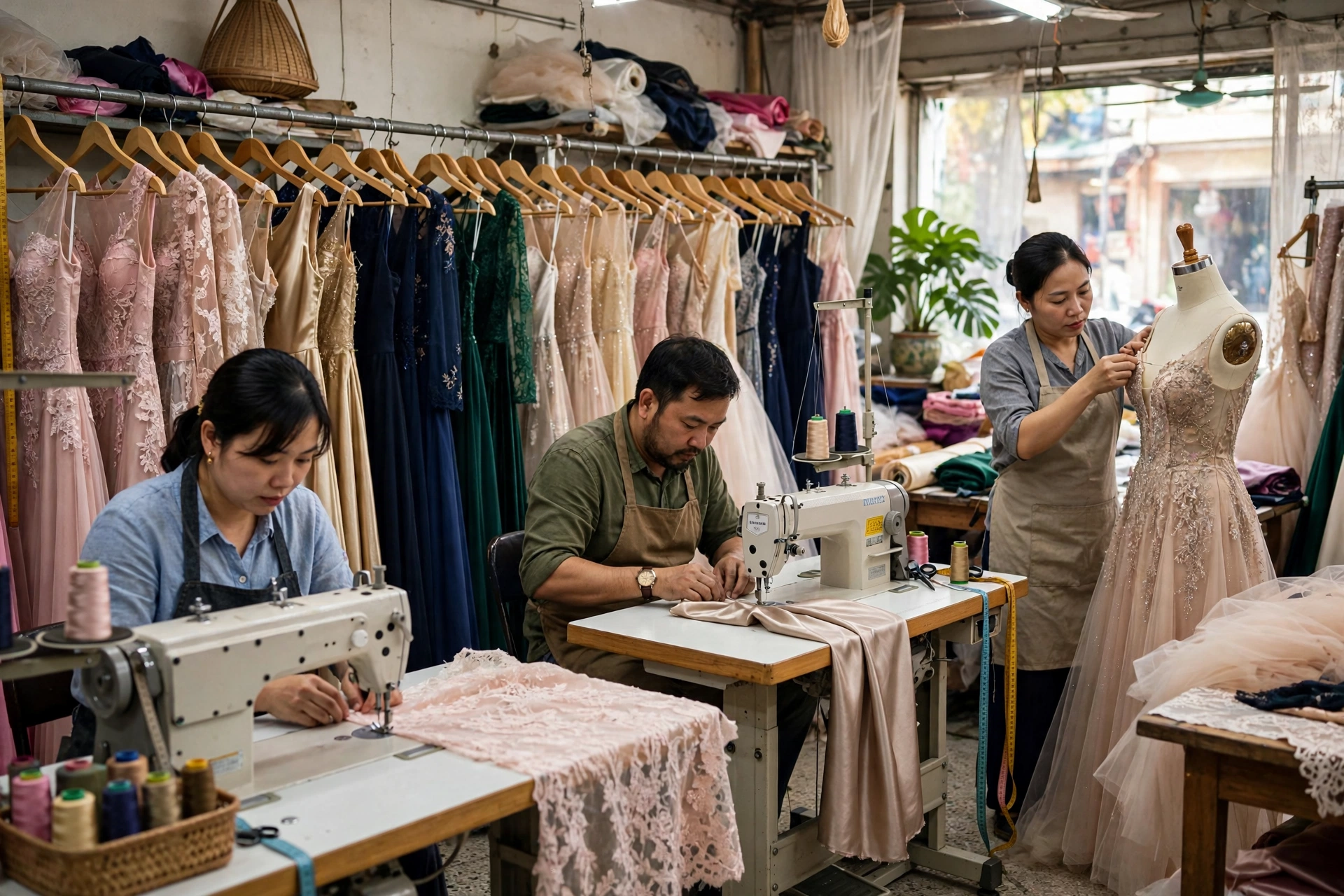
1. Evaluate occasionwear quality, not generic garment quality
Generic garment-quality checks miss what makes girls occasionwear fail. A dress can pass a general inspection and still be unwearable for a child at a celebration, or fall apart at its most delicate details. Use an occasionwear audit checklist on a sample:
- Multi-layer tulle comfort. Check tulle softness, layering and volume together. Stiff, scratchy or poorly layered tulle causes immediate discomfort and returns, however beautiful the dress looks on a rail.
- Seams and lining. Check interior seams for roughness or exposure, and lining for softness and neat finishing, especially at the neckline, armholes, waist and bodice.
- Fragile 3D appliques and details. Check 3D florals, lace, embroidery, bows and sequins for secure attachment and durability. A detail that looks perfect in a photograph but loosens in wear or transit is a quality failure, not a styling choice.
- Lace fraying. Check lace edges for fraying or unfinished ends, particularly where lace meets tulle or lining.
- Zip and closure durability. Check zippers for smooth running and secure finishing, and buttons and hooks for flat, safe placement. A failed closure on an event day cannot be fixed by a boutique in time.
A manufacturer that welcomes this level of sample audit is demonstrating occasionwear specialisation. A manufacturer that offers only generic quality assurances, without a sample that survives this checklist, has not demonstrated it — whatever its catalogue photographs suggest.
2. Catalog-ready or custom OEM: choose the workflow that fits the boutique
Many Vietnam manufacturing guides push lengthy custom OEM or ODM production as the default. For many boutiques, that is the wrong workflow. A boutique that needs fast seasonal restocking needs a deep ready catalog, not a months-long custom development cycle.
Catalog-ready fit suits a boutique that needs:
- Fast seasonal restocking from proven styles
- Breadth across styles, colours and sizes for different occasions
- Lower development risk, because styles are already produced and can be sampled
- Repeat ordering on established specifications, without reinterpretation each time
TutuPetti’s approximately 127-product catalog is an example of catalog-ready depth for occasionwear: princess, birthday, party, flower girl dresses and tulle gowns that a boutique can browse, sample and reorder. Custom OEM or ODM production, where it is offered, is a separate workflow with its own timelines and terms, confirmed on inquiry for a specific design. It should not be assumed to be available, fast or low-cost simply because a manufacturer offers a catalog.
The partnership question is therefore not “can you make anything?” but “does your workflow match how my boutique actually buys?” A boutique that buys seasonally, in breadth, and on event deadlines needs catalog depth and reorder speed. A boutique that needs a proprietary design needs a custom workflow with its own confirmed timeline. Conflating the two is how seasonal stock arrives late.
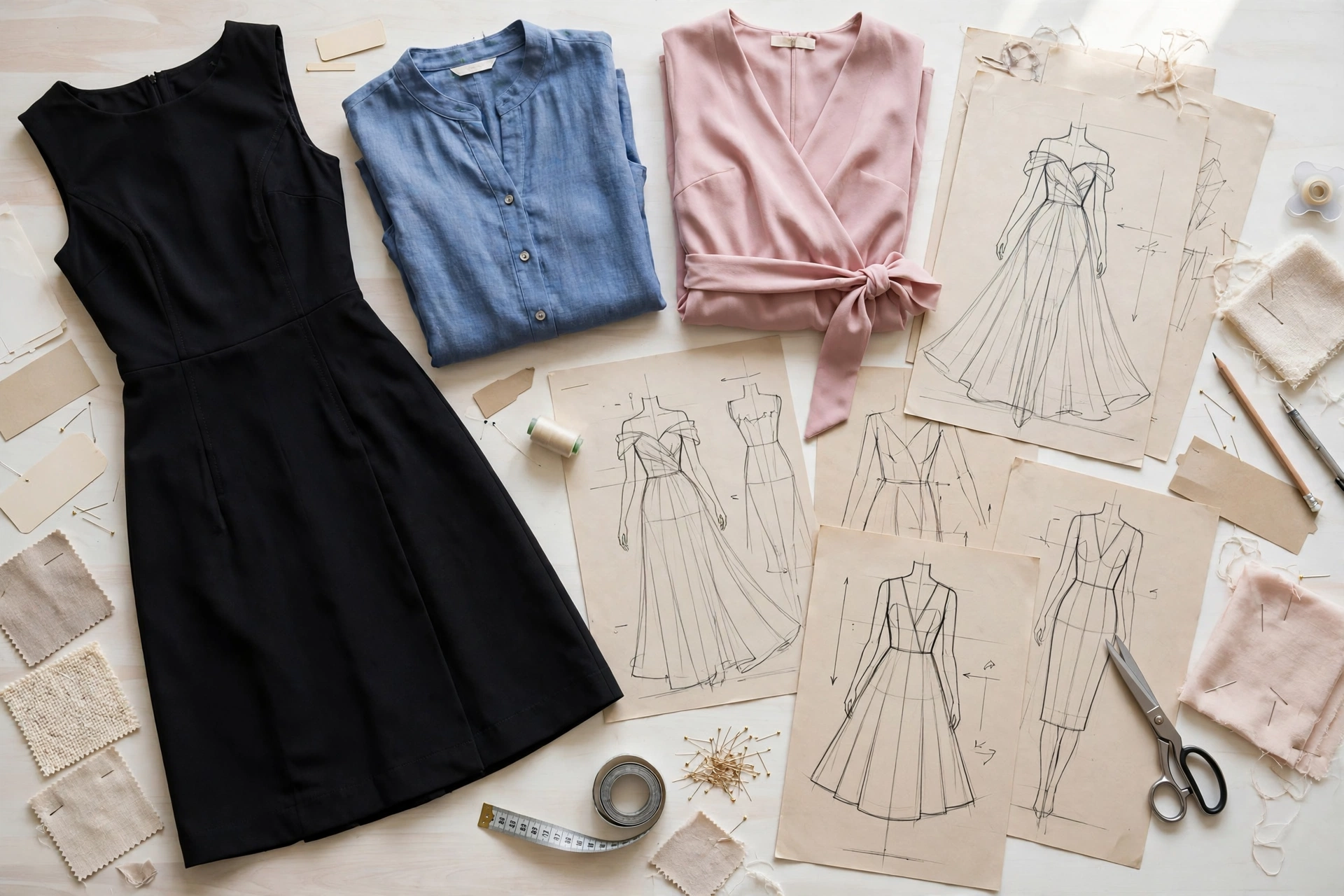
3. Judge repeat-order reliability and seasonal event lead times
A first order that arrives well proves little about a partnership. The partnership is proven on the second, third and tenth orders — and on whether stock arrives before non-negotiable event dates.
Judge repeat reliability on three things:
- Batch consistency. Do later batches match the approved sample in tulle, colour, stitching and finishing, across sizes and colours? Ask how batch consistency is managed, and what is checked before dispatch.
- Split timelines. Do not accept a single vague transit time. TutuPetti usually needs 3–5 business days for preparation and 4–10 business days for international shipping, planned separately, around 7–15 business days before customs delays. A manufacturer that cannot separate preparation from transit cannot help a boutique plan event stock reliably.
- Seasonal planning. Can the manufacturer support seasonal peaks — weddings, birthdays, holidays — with preparation and shipping windows that land stock before the selling window, not during it? Work backwards from event dates through customs buffer, transit and preparation to find the latest safe order date.
For a Vietnam girls dress manufacturer for boutiques, a partner that is reliable only on a first, small, unhurried order has not yet proven partnership reliability. Reliability is consistency across batches, seasons and deadlines.
4. Tier structures and growth scalability: start small, scale with proof
Rigid per-style MOQs punish a new boutique. Vague “low MOQ” claims mislead it. What a growing boutique needs is a tier structure that lets it start small, prove sell-through, and scale — with terms confirmed in writing at each stage.
TutuPetti’s tiers are named Start Up, Scale Up and Glow Up. Tier thresholds, discounts and MOQs are confirmed on inquiry and are not stated here. The growth logic to test, without those figures, is:
- Start small and learn. A new boutique should be able to test which styles, colours and sizes sell locally before committing at scale. The entry tier’s value is learning, not only discount.
- Scale on sell-through evidence. Movement to a larger tier should follow proven sell-through, not ambition. Ask how upgrade is triggered, how tiers are reviewed, and what happens after a slow season — the same movement questions that protect a boutique from a tier trap.
- Avoid the two scalability bottlenecks. A partner suited only to very large brands will not serve a growing boutique well; a micro-workshop that cannot grow consistently will not scale with it. Judge scalability by whether the manufacturer’s workflow, catalog depth and timelines can support the boutique’s next stage, not only its first order.
A tier structure is a growth tool only if its terms are clear, its movement rules are written, and its entry point does not force a boutique to overcommit before it has sell-through proof.
5. Landed-cost clarity: duties stated up front, not discovered on arrival
The most common financial surprise in Vietnam sourcing is not the product price. It is the import duty that was never factored into the margin forecast, because initial quotes glossed over customs obligations.
For TutuPetti orders, the duty fact is verified and should be stated up front: import duties and taxes are excluded from wholesale prices and paid by the buyer. Duty rates vary by destination and are not stated here, because none has been verified for publication. Factor them into landed cost from the start:
Landed cost per dress = (product cost + international shipping + import duties and charges + other confirmed charges) ÷ number of dresses
A manufacturer partnership that states duties up front, separates preparation from transit, and confirms shipping costs in writing for a specific order is protecting the boutique’s margin forecast. A partnership that quotes only a piece price, and leaves duties to be discovered on arrival, is not — however attractive the piece price looks.
Manufacturer-evaluation checklist for boutiques
- Occasionwear sample audited: tulle comfort, seams, lining, 3D details, lace edges, zips
- Specialisation confirmed: girls occasionwear focus, not general garment production
- Catalog depth checked: ready styles for fast seasonal restocking, approximately 127 for TutuPetti
- Catalog vs OEM fit decided: ready catalog for seasonal buying, custom workflow only where confirmed
- Batch consistency and repeat-order reliability assessed across batches and seasons
- Split timelines confirmed: preparation usually 3–5 business days, shipping usually 4–10 business days, plus a customs buffer
- Tier growth terms confirmed in writing: entry, upgrade, review and slow-season handling
- Landed cost calculated with buyer-paid duties included, not discovered on arrival
- Communication responsiveness tested: specification questions answered with production-level detail

Frequently asked questions
What makes a Vietnam manufacturer good for boutiques?
Specialisation in girls occasionwear, a deep ready catalog for seasonal restocking, consistent batches, split preparation and shipping timelines, a clear tier structure for growth, and landed-cost transparency with duties stated up front.
How should I evaluate occasionwear quality?
Audit a sample for multi-layer tulle comfort, interior seams and lining softness, secure 3D appliques and details, lace edges without fraying, and durable zips and closures. Generic garment checks miss these occasionwear failure points.
Is a ready catalog or custom OEM better for a boutique?
For most boutiques buying seasonally, a ready catalog is better: faster restocking, proven styles and lower development risk. Custom OEM is a separate workflow with its own confirmed timelines, suited to a proprietary design rather than seasonal buying.
How long do TutuPetti orders take?
TutuPetti usually needs 3–5 business days for preparation and 4–10 business days for international shipping, around 7–15 business days before customs delays. Customs clearance and local delivery may add time.
Who pays import duties on TutuPetti orders?
Import duties and taxes are excluded from wholesale prices and paid by the buyer. Rates vary by destination and are not stated here, because none has been verified for publication.
What are TutuPetti’s MOQ and tier terms?
MOQ thresholds and tier conditions for Start Up, Scale Up and Glow Up are confirmed on inquiry for your specific order. This article does not state them, because none has been verified for publication.
How do I know a manufacturer can scale with my boutique?
Check whether its workflow, catalog depth and timelines support your next stage, not only your first order, and whether its tier terms let you start small and scale on sell-through evidence, with upgrade and review rules in writing.
What if later batches differ from the sample?
Ask before ordering how batch consistency is managed, what is checked before dispatch, and what recourse applies for batch differences. Confirm these points in writing; specific defect and return procedures are confirmed on inquiry.
Does TutuPetti offer custom OEM production?
Custom production possibilities, if any, are confirmed on inquiry for your specific design. Do not assume custom OEM availability, speed or cost from the existence of a ready catalog.
How do I start with TutuPetti as a boutique partner?
Browse designs in the TutuPetti shop, then contact the team via the About page with your boutique details, target market and typical order size, and request written confirmation of MOQ, tier, sample, payment, shipping and landed-cost terms for your specific order.
Choose a partner, not just a price
A Vietnam girls dress manufacturer for boutiques is a partnership decision: occasionwear quality that survives a sample audit, a catalog that restocks seasonally, batches that stay consistent, tiers that scale with proof, and landed costs with duties stated up front.
TutuPetti, a Vietnam-based manufacturer founded in 2009, offers princess, birthday, party, flower girl dresses and tulle gowns for boutiques that want a specialist occasionwear partner. Browse designs in the TutuPetti shop, then contact the team via the About page with your boutique details and request written confirmation of the terms that apply to you. Wholesale contact details listed there include the Zalo wholesale contact 0902 506 539 and email tutupetti@gmail.com as published on that page.
