
For a small boutique, wholesale girls dresses are not bought one beautiful dress at a time. They are bought as a small collection that has to work together on the rail, in photographs and in the fitting room. A focused range sells more reliably than a rail full of unrelated one-off styles, because customers can compare, staff can advise and stock can be replenished without starting again.
This guide explains how to build a first wholesale range for boutiques: how to choose the occasion mix, how to plan sizes without tying up cash, how to present tulle so it photographs well, how to spot a likely bestseller and how to plan around real lead times.
It is written for boutique owners and buyers who want a profitable, low-risk collection — not the largest possible order. Where terms such as minimum order quantity, pricing tiers or delivery conditions matter, confirm them for your specific designs and destination before you commit.
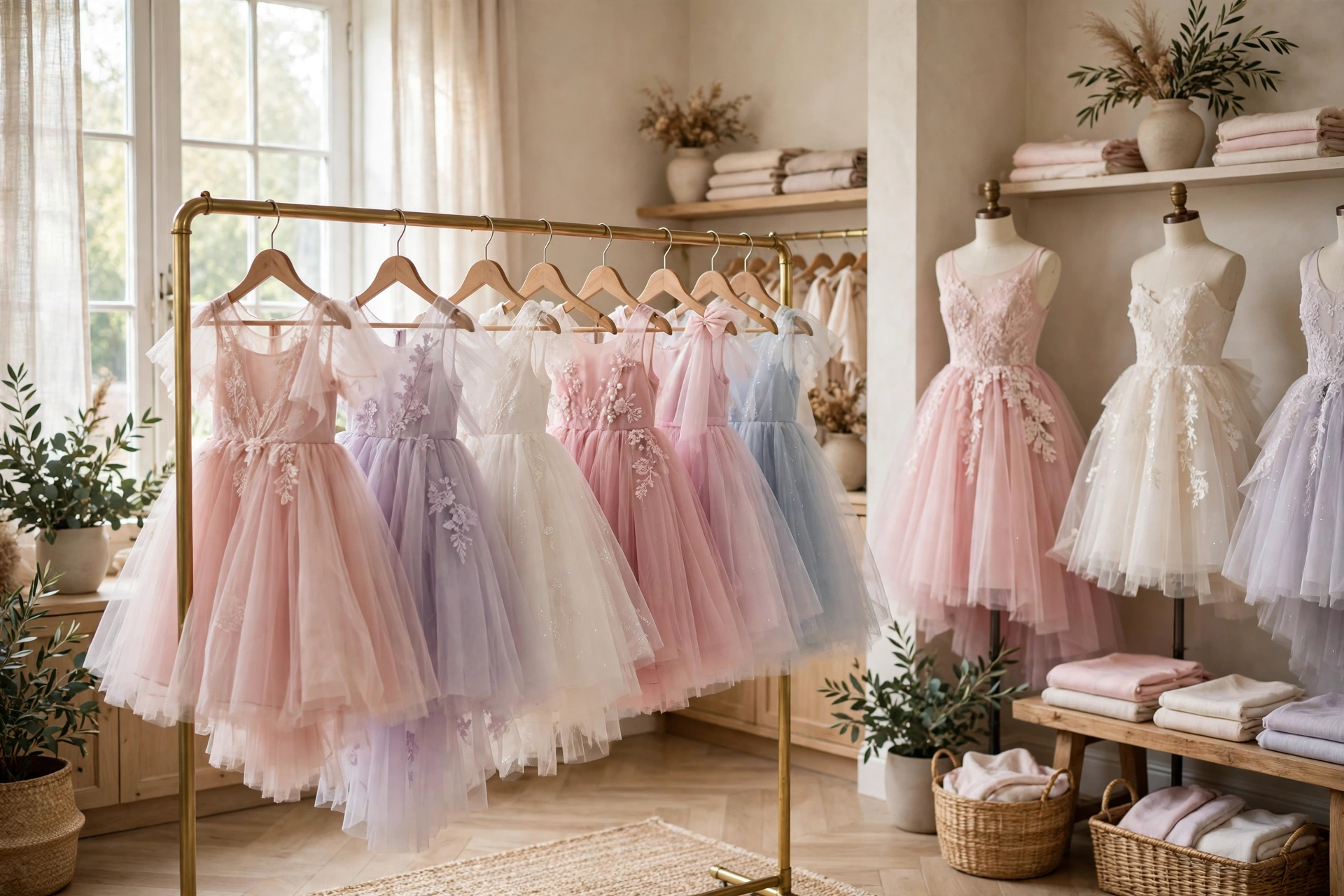
Quick answer: wholesale girls dresses for boutiques
Wholesale girls dresses for boutiques work best when the range is planned as a small, focused collection, not as a set of unrelated styles. Start with the occasions your customers actually buy for, choose a narrow size run, present tulle carefully and pre-sell before the stock arrives. In this guide:
- Build the occasion mix first
- Plan the size run to protect cash
- Present tulle properly and pre-sell
- Recognise bestseller traits
- Align seasonal planning with lead times
| Occasion | What to prioritise | Buying note |
|---|---|---|
| Birthday | Photogenic, comfortable party dresses | Photographs well; easy to move in |
| Flower girl / wedding guest | Soft tulle, neat finishing, calm colours | Check lining and length carefully |
| Everyday celebration / party | Durable, easy-care dresses that still feel special | Comfort and washability matter |
| Seasonal / festive | A small number of strong seasonal styles | Do not overbuy single-season prints |
1. Build the occasion mix first, then choose individual dresses
A boutique range should answer a customer’s question — “What is this dress for?” — at a glance. If every dress is a party dress, everyday buyers leave empty-handed. If every dress is plain, the celebration buyer sees nothing special.
Start from your customers, not from a supplier catalogue. A boutique that serves birthdays and weddings needs different dresses from one that serves everyday celebrations. Choose two or three occasions to serve well before adding more.
- One hero occasion that defines the rail
- One supporting occasion for breadth
- One seasonal opportunity, bought in a limited quantity
Within each occasion, limit the number of designs. Three strong birthday dresses that can be photographed together are more useful than ten unrelated styles that compete with each other. The aim is a rail a customer can understand in under a minute.
2. Plan the size run to protect cash, not just to fill the rail
A size run is a cash decision. Every size that does not sell is money sitting on a hanger, so the first range should be narrow and deliberate.
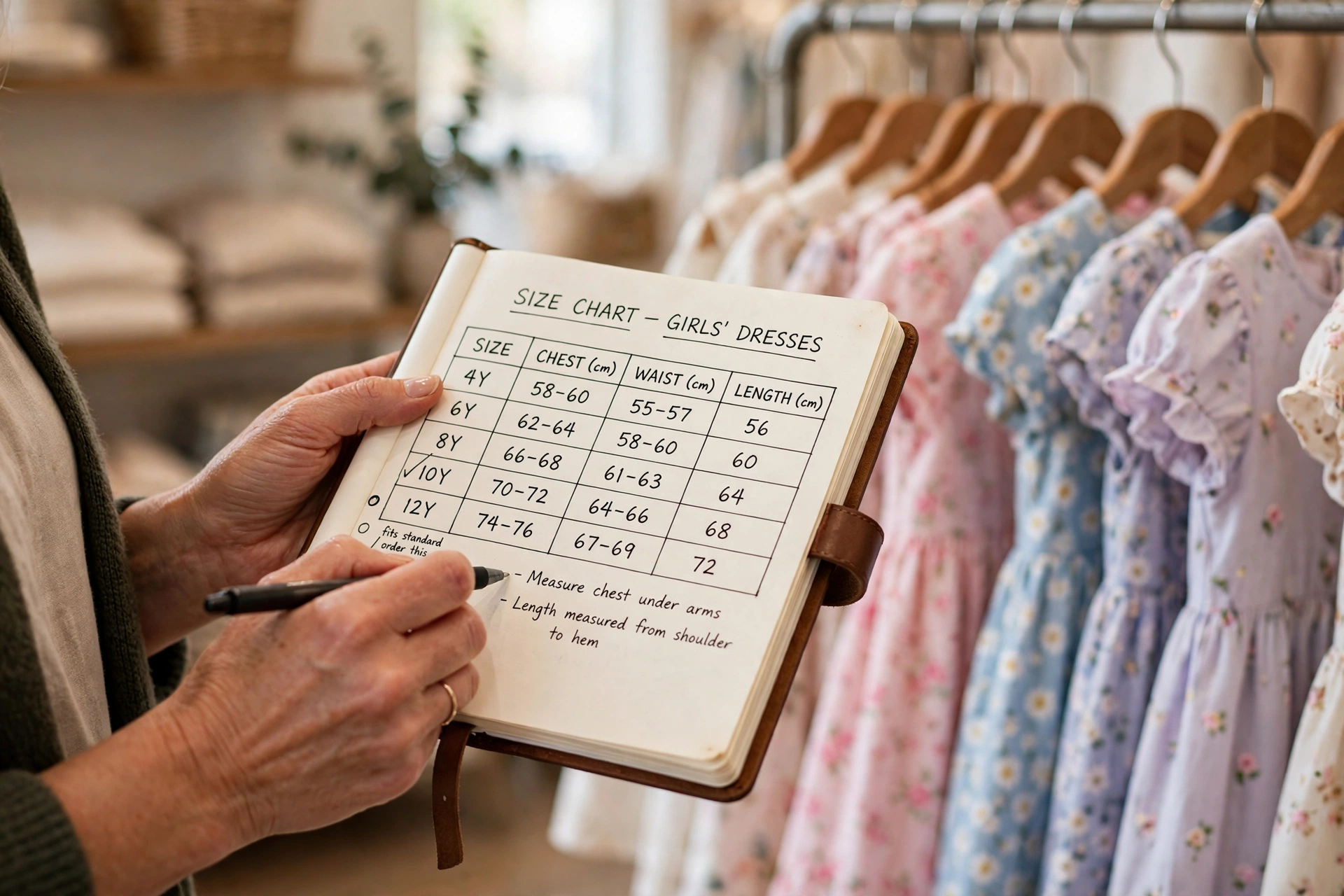
Work from your actual customers: the ages and measurements you already sell most often, not the full range a supplier can offer. A boutique that mainly sells for ages 3–6 should not buy evenly across a much wider range on its first order.
- Start with the core sizes you already sell
- Add one size above and below only if demand is proven
- Check measurements for each design, not age labels alone
- Hold a small reserve for reorders rather than buying deep in every size
3. Present tulle properly and pre-sell before the dress arrives
Wholesale pages focus on delivery and terms, but customers buy what they see. Tulle that arrives crushed or photographed flat will not sell, however good the dress is.
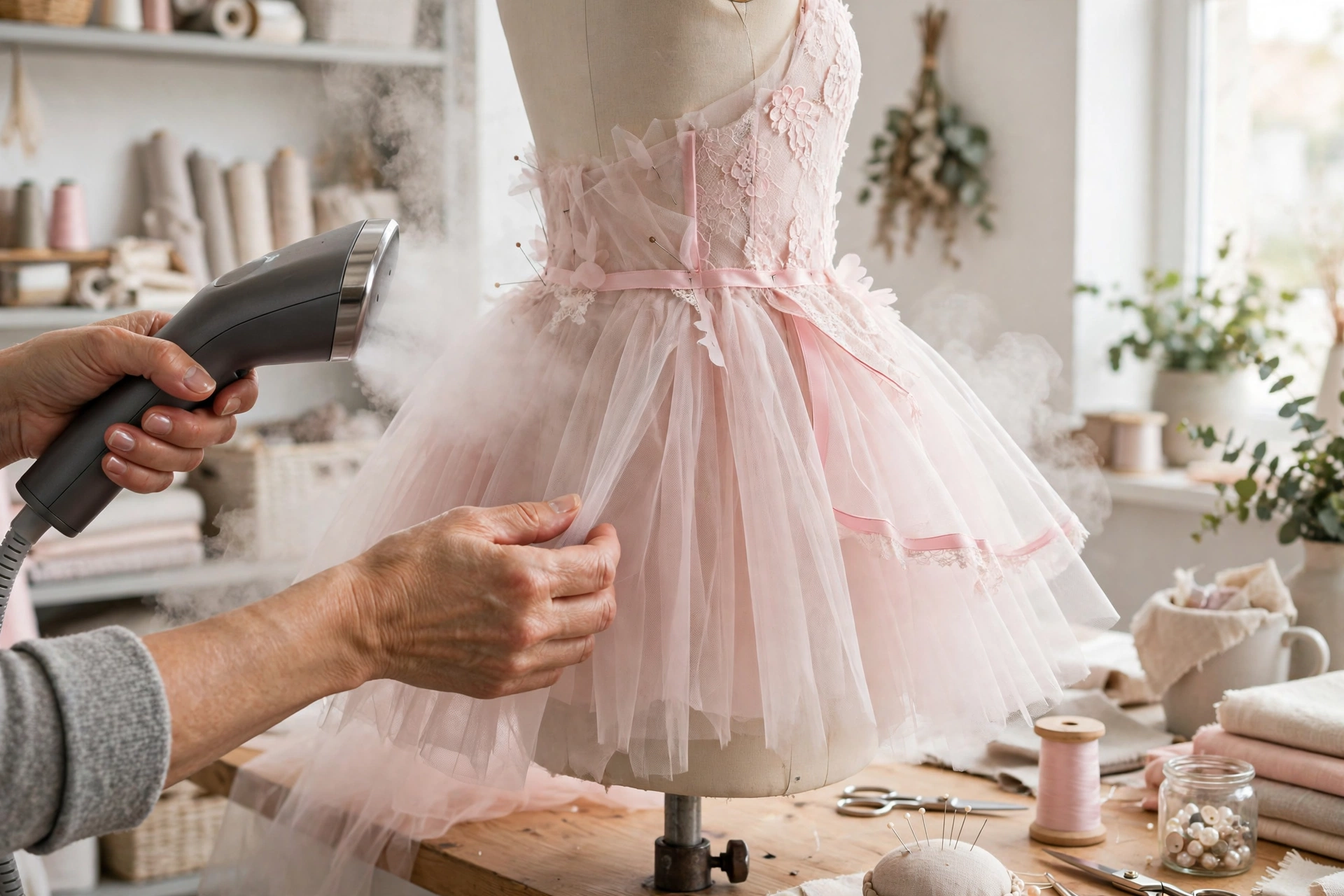
Steam or press according to the care guidance for the specific dress, hang it at eye level and photograph it on a form or model in natural light. Show the skirt from the side as well as the front, because tulle volume is difficult to judge from a single flat image.
Pre-selling is the low-risk part of this step. Share the arrival date, the available sizes and the occasions the dress suits, and take reservations before the stock lands. That way the first dresses are already matched to customers when they arrive.
4. Recognise bestseller traits before you buy
Bestsellers are rarely the most unusual dress on the page. They are usually the dress that is easy to explain, easy to photograph and easy to fit.
- A clear occasion: customers immediately know when to wear it
- Comfort that can be described in one sentence: soft lining, easy closure, no scratchy layers
- Photogenic tulle or detail that reads clearly in a small social-media image
- A size range that matches your existing customers
If a dress needs a long explanation to justify its price or its occasion, it is a harder sell. Keep those styles to a very small part of the range until customers prove the demand.
5. Align seasonal planning with real lead times
Seasonal dresses fail when they are ordered too late, not when they are chosen badly. Work backwards from the date customers need the dress, not from the date a supplier can ship.
| Planning step | Allow for | Why it matters |
|---|---|---|
| Confirm designs and sizes | Before ordering | Avoids changes after production starts |
| Order preparation | Usual 3–5 business days | Included in every order timeline |
| International shipping | Usual 4–10 business days | Varies by destination and carrier |
| Customs and handling | Extra time, varies | Duties are paid by the buyer |
| In-store preparation | Steaming, photography, listing | Prevents a rushed launch |
A dress that arrives after the birthday or wedding season it was bought for is not a bargain, however attractive the price. Build a small buffer into every seasonal plan and order the hero occasion first.
First-range checklist for boutiques
- Occasions: two or three occasions served well, not every occasion at once
- Designs: a small number of strong styles per occasion
- Sizes: a narrow core size run based on real customers
- Measurements: checked for each design, not age labels alone
- Tulle presentation: steamed, hung at eye level and photographed from the side
- Pre-selling: arrival date, sizes and occasions shared before stock lands
- Lead times: preparation, shipping, customs and in-store preparation allowed for
- Reorders: a small reserve held for proven sellers
Frequently asked questions
What is the best way to start buying wholesale girls dresses for a boutique?
Start with a small, focused range for two or three occasions your customers already buy for. Choose a narrow size run, present tulle carefully and pre-sell before the stock arrives.
How many designs should a first boutique range include?
Fewer than most buyers expect. A small number of strong styles per occasion is easier to photograph, explain and replenish than a rail of unrelated one-off dresses.
Should a boutique buy the full size range on its first order?
No. Start with the core sizes you already sell and add sizes above and below only where demand is proven. Check measurements for each design rather than relying on age labels alone.
Why does tulle presentation matter for wholesale dresses?
Because customers judge tulle from photographs and from the rail. Dresses that are steamed, hung at eye level and photographed from the side as well as the front sell more reliably than dresses shown flat or crushed.
What makes a wholesale girls dress a likely bestseller?
A clear occasion, comfort that can be described in one sentence, detail that reads clearly in a small image and a size range that matches your existing customers.
How far ahead should seasonal dresses be ordered?
Work backwards from the date customers need the dress. Allow for order preparation, international shipping, customs and handling, and in-store steaming, photography and listing — not just the shipping window alone.
Do wholesale prices include import duties?
No. Import duties are excluded from TutuPetti’s prices and are paid by the buyer. Confirm duties, VAT/GST and handling responsibilities for your destination before ordering.
Can a boutique pre-sell dresses before they arrive?
Yes. Share the arrival date, available sizes and suitable occasions, and take reservations in advance. Pre-selling reduces the risk of stock sitting unsold after it lands.
What should a boutique check before reordering a style?
Whether it sold through in its core sizes, whether customers asked for other sizes or colours, and whether it photographed and fitted well. Reorder proven sellers rather than replacing them with untested styles.
How can a small boutique keep wholesale buying low-risk?
Buy a focused range, keep the size run narrow, pre-sell before arrival and hold a small reserve for reorders. Confirm minimums, pricing and delivery conditions for your specific designs before committing.
Start building a boutique range that sells through
A profitable boutique range is not the largest range. It is the range a customer can understand quickly, a team can explain confidently and a boutique can replenish without waste. Start with occasions, protect cash with a narrow size run, present tulle properly and plan around real lead times.
Ready to choose your first range? Browse the TutuPetti shop, then contact the TutuPetti team through the contact page with your preferred occasions, designs and size requirements. You can also learn more about the company on the TutuPetti About page.
