
A sample is the cheapest insurance a boutique can buy. It costs far less than a bulk order that arrives scratchy, wrongly coloured, badly finished or inconsistently sized — and it answers questions no photograph can answer.
If you are learning how to order a sample girls dress before a bulk order, do not treat the sample as a formality. Treat it as a test with a protocol: inspect comfort and construction, understand what the sample can and cannot prove about bulk production, plan the timeline honestly, and give feedback the factory can actually act on.
TutuPetti is a Vietnam-based manufacturer and wholesale supplier founded in 2009, specialising in princess, birthday, party, flower girl dresses and tulle gowns for girls. Through its wholesale online shop at tutupetti.net, boutique buyers in the USA, Australia, UK and Europe can explore approximately 127 dress products and inquire about suitable ordering options. Sample availability, price, shipping cost and any fee-deduction terms are confirmed on inquiry for your specific design.
Quick answer: how to order a sample girls dress before a bulk order
How to order a sample girls dress before a bulk order: choose a representative style, colour and size, contact TutuPetti with that exact specification and your delivery country, confirm sample price, shipping and any fee terms before payment, then inspect the sample on a dress form for interior comfort, construction, colour and fit against measurements. Approve, approve with corrections, or reject using a written matrix — vague feedback helps no one. TutuPetti usually needs 3–5 business days for preparation and 4–10 business days for international shipping, around 7–15 business days before customs delays. A single sample proves stitching, silhouette and base material; it does not prove dye-lot consistency, mass-cutting tolerances or consistency across every size and colour in bulk.
In this guide: 1. Child-comfort inspection | 2. Sample vs bulk reality | 3. Timelines | 4. Feedback and approval matrix | Sample checklist | FAQs
| Sample question | What to check | Record it as |
|---|---|---|
| Is it comfortable? | Interior seams, lining, scratchiness, bodice comfort | Location + observation + photograph |
| Is it well made? | Stitching, closures, embellishments, finishing | Location + observation + photograph |
| Does it match the catalogue? | Colour, silhouette, layers, volume | Side-by-side note + photograph |
| Does it fit the measurements? | Chest, waist, length, armholes vs size chart | Measurement vs chart, per design |
| Can bulk match it? | Ask about dye lots, cutting and consistency | Written confirmation, not assumption |
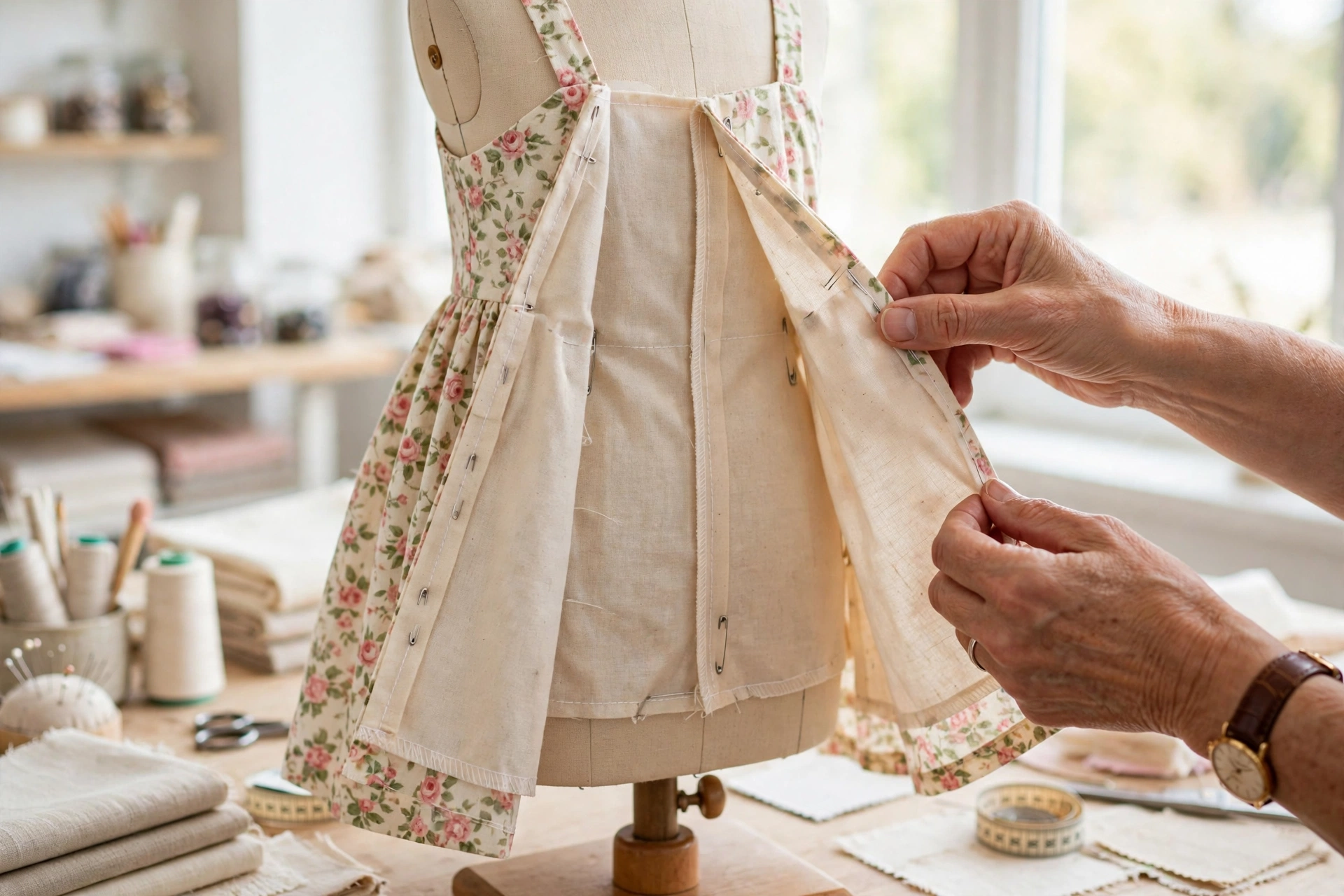
1. Inspect child-specific comfort and interior ergonomics first
Generic advice says “check fabric feel.” For children’s wear, that is not enough. A dress that looks beautiful on a rail can still be unwearable if the interior irritates a child for a whole celebration — and that discomfort turns directly into returns.
Use this inspection protocol on the sample, on a dress form, with measurements in hand:
- Interior seams. Turn the dress inside out. Are seams enclosed, flat and smooth, or exposed, rough or scratchy? Check the neckline, armholes, waist and bodice interior in particular.
- Lining. Is there a lining, is it soft and comfortable, and is it neatly finished? Check whether lace, tulle or embellishments sit directly against skin anywhere.
- Scratchiness and bodice comfort. Run a hand over interior surfaces the way a child would experience them during wear. Check the bodice for stiffness, rough edges or rigid elements that would press during a long event.
- Closures. Do zippers run smoothly, do buttons and hooks sit flat, and do closures avoid exposed sharp or rough parts?
- Photographic record. Photograph each area you inspect, inside and out, in good light. A photograph turns “the lining feels rough” into evidence a factory can locate and fix.
Comfort is not a soft extra for children’s occasionwear. It is a dealbreaker category, as Section 4 explains. A dress that fails comfort should not be approved on the strength of its exterior alone.
2. Understand what a sample proves — and what it does not
A flawless sample is encouraging. It is not a guarantee that bulk production will match it exactly. Understanding the boundary protects you from both overconfidence and unfair blame.
What one sample usually proves:
- Stitching quality and finishing on that specific dress
- Silhouette, layering and overall design intent
- Base material and colour in that specific piece
- Construction approach for appliques, lace, embroidery, bows, sequins and zips on that piece
What one sample does NOT prove:
- Dye-lot variance. Bulk netting and fabrics can vary slightly in hue between dye lots, especially pastels, blush pinks and ivory. Ask how colour consistency is managed across a bulk run.
- Mass-cutting tolerances. Cutting many layers at once can introduce small variations that a single hand-finished sample does not show.
- Packing compression. A sample shipped individually may arrive fluffier than bulk dresses packed together. Ask how bulk packing affects volume and finishing on arrival.
- Consistency across sizes and colours. One size in one colour does not prove every size and colour in the range. For a large bulk order, ask what checks apply across sizes and colours, and whether additional size points should be sampled for critical styles.
The right question after a good sample is not “can we go ahead?” alone. It is “what will you do to keep bulk production aligned with this sample, and what should I check on arrival?” Get that answer in writing before you commit bulk capital.
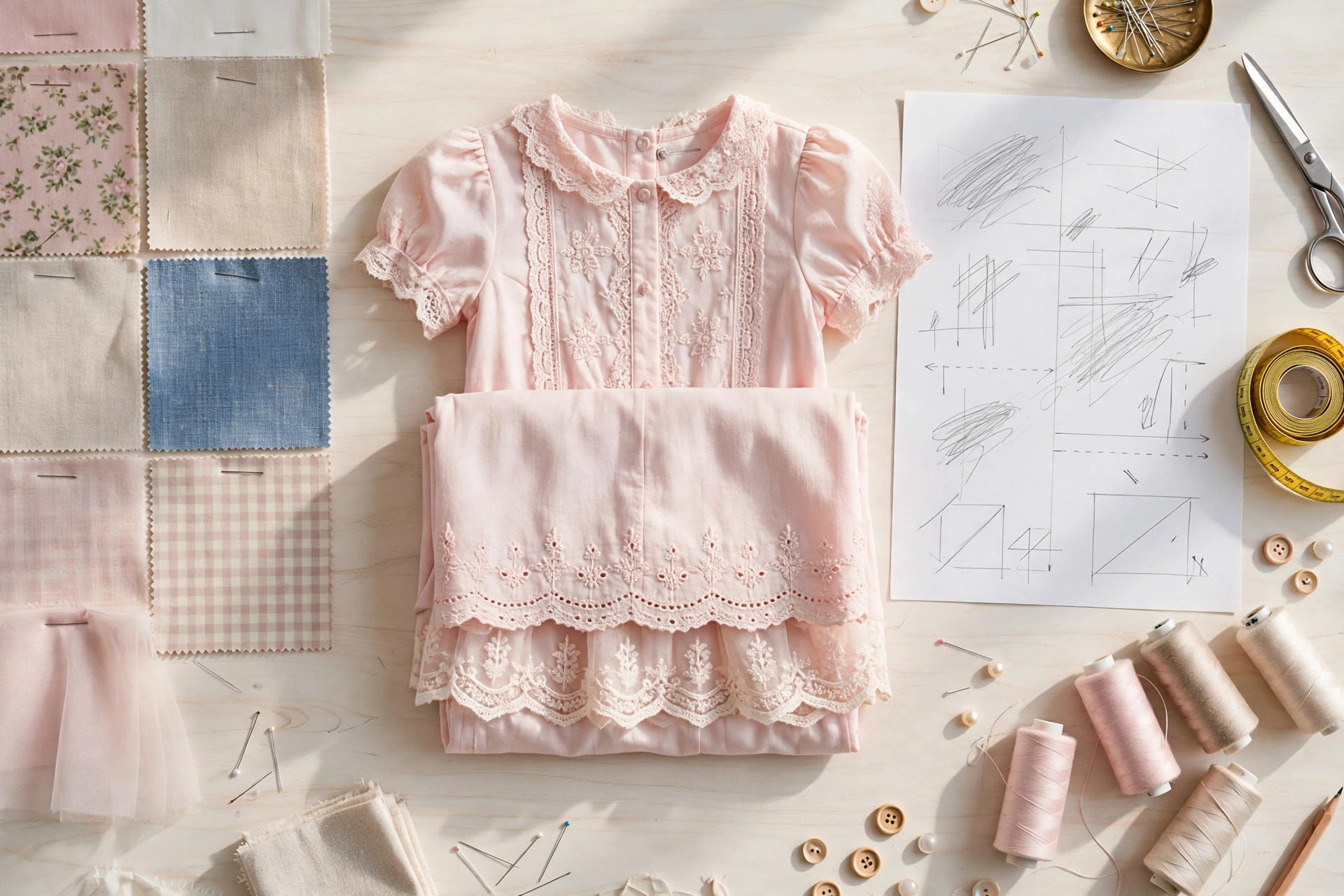
3. Plan sample timelines honestly, including international shipping
Buyers often underestimate international sample timelines and then miss launch deadlines. Plan the sample as a project, not as a quick delivery.
TutuPetti usually needs 3–5 business days for preparation, followed by usually 4–10 business days for international shipping. That gives a general planning window of around 7–15 business days before customs delays for a sample to reach you — an estimate for planning, not a guaranteed delivery date. Customs clearance and local carrier processing may add time.
| Sample stage | Plan for |
|---|---|
| Choose style, colour and size | Representative of the bulk order, not the easiest option |
| Contact and confirm terms | Sample price, shipping, fee terms, delivery country — all confirmed on inquiry |
| Preparation | Usually 3–5 business days for TutuPetti |
| International shipping | Usually 4–10 business days for TutuPetti |
| Customs and local delivery | Extra time, varying by destination; duties excluded, buyer pays |
| Inspection and feedback | Allow time to inspect, photograph and write structured feedback |
If your bulk order must meet a wedding or holiday deadline, work backwards from that deadline through bulk preparation and shipping as well, not only through the sample. When you learn how to order a sample girls dress before a bulk order, remember that a sample arriving late is still useful for quality, but it cannot rescue a bulk timeline that was already impossible.
4. Turn inspection into a feedback and approval matrix
Vague feedback wastes the sample. “Not fluffy enough” or “colour looks off” cannot be fixed by an overseas factory without location, observation and evidence. Use a matrix with three decisions:
Approve: The sample meets comfort, construction, colour and measurement expectations. Record approval in writing with the exact style, colour, size and specifications approved.
Approve with corrections: The sample is close, but specific changes are needed. For each change, write: location on the dress, what you observed, a photograph, and the exact change requested. Example structure: “Waist seam, interior — rough exposed seam on the left side — photograph attached — please enclose the seam.”
Reject: The sample fails a dealbreaker. Dealbreakers include itchy or scratchy base fabric, unsafe or broken closures, major colour or silhouette mismatch, or measurements far from the size chart. State the dealbreaker clearly and decide whether a revised sample is worth requesting or whether to choose a different style.
| Flaw type | Example | Decision |
|---|---|---|
| Correctable | Minor bow placement, slight finishing detail | Approve with corrections, with photograph and exact change |
| Correctable with re-check | Colour slightly off, volume slightly low | Approve with corrections, request confirmation or revised sample |
| Dealbreaker | Itchy base fabric, broken closure, major mismatch | Reject, or request a revised sample only if the cause is clearly fixable |
Written, photographic feedback is not bureaucracy. It is the bridge between what you saw in your shop and what a factory thousands of miles away can change.
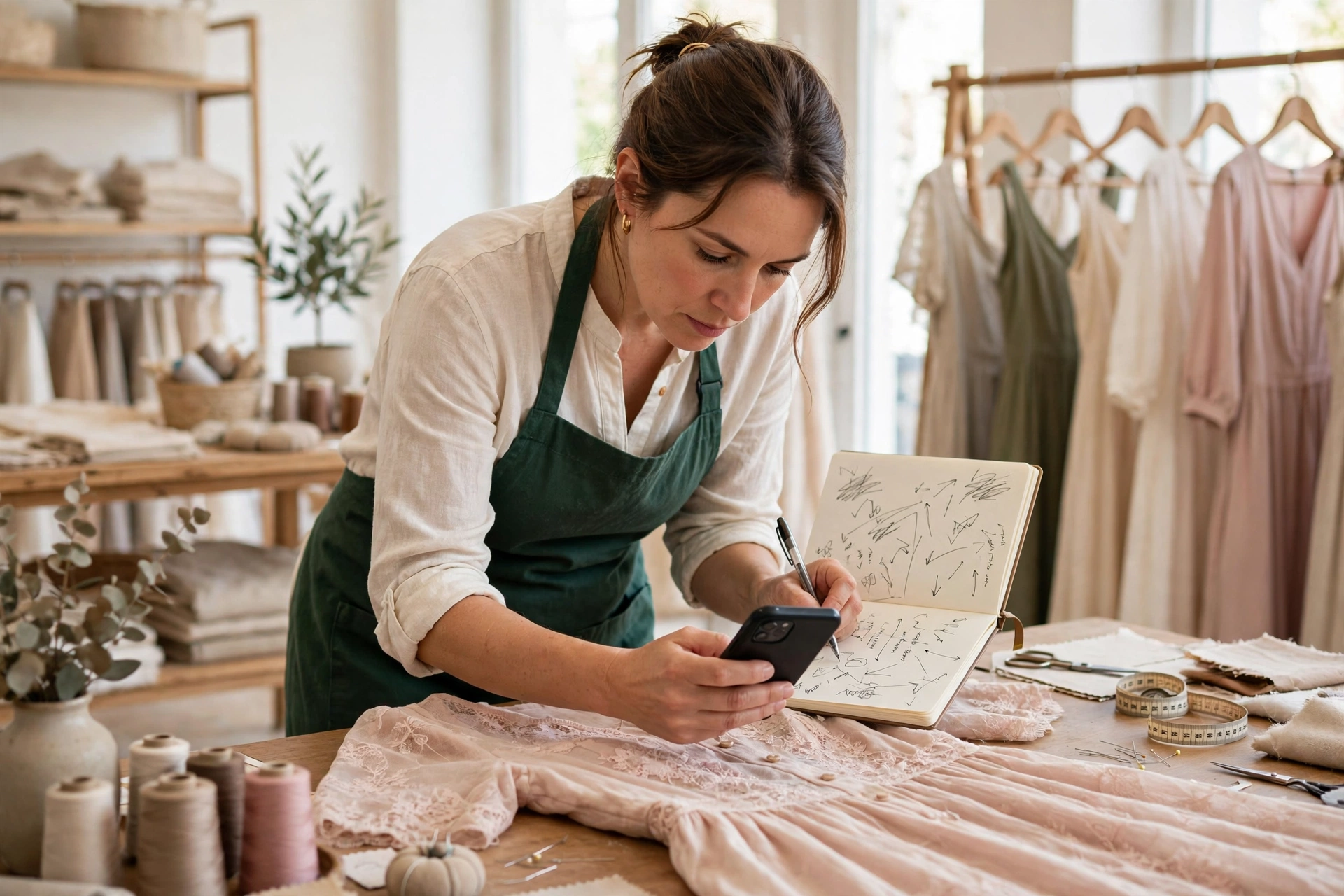
Sample order checklist for boutiques
- Style: representative of the bulk order, not the easiest or most forgiving option
- Colour and size: exact colour and size point specified, measurements checked against the size chart
- Terms: sample price, shipping cost, fee terms and delivery country confirmed on inquiry
- Timeline: preparation 3–5 business days + shipping 4–10 business days, plus customs buffer
- Comfort: interior seams, lining, scratchiness and bodice comfort inspected on a dress form
- Construction: stitching, closures, embellishments and finishing inspected inside and out
- Match: colour, silhouette, layers and volume compared with catalogue imagery
- Bulk limits: dye lots, cutting tolerances, packing and cross-size consistency asked about in writing
- Feedback: location + observation + photograph + requested change for every correction
- Decision: approve, approve with corrections, or reject — recorded in writing before bulk commitment
Frequently asked questions
Why should I order a sample before a bulk order?
A sample lets you test comfort, construction, colour and fit with limited capital at risk, before committing to a bulk order that could arrive scratchy, wrongly coloured or inconsistently sized. It also tests preparation, shipping and communication timelines.
What should I check first on a sample girls dress?
Check interior comfort first: interior seams, lining softness, scratchiness and bodice comfort. Then check construction, colour and silhouette against catalogue imagery, and measurements against the size chart for that design.
Does a good sample guarantee bulk quality?
No. A sample proves stitching, silhouette and base material on that piece. It does not prove dye-lot consistency, mass-cutting tolerances, packing effects or consistency across every size and colour. Ask in writing how bulk production will stay aligned with the sample.
How long does a sample order from Vietnam take?
TutuPetti usually needs 3–5 business days for preparation and 4–10 business days for international shipping, around 7–15 business days before customs delays. Customs clearance may add time, so plan sample timelines with a buffer before bulk deadlines.
What are TutuPetti’s sample prices and fee terms?
Sample price, shipping cost and any fee-deduction or credit terms are confirmed on inquiry for your specific design. This article does not state them, because none has been verified for publication.
Can a sample fee be deducted from a bulk order?
Ask TutuPetti directly for your specific order. Fee-deduction or credit terms, if any, should be confirmed in writing before you pay for the sample.
What if the sample colour differs from photographs?
Record the difference with photographs in good light, noting the exact location and observed hue. Colour differences, especially in pastels, blush pinks and ivory, can reflect screen variation or dye-lot differences — ask the factory which applies and whether a revised sample is needed.
How should I give feedback on a sample?
Use location + observation + photograph + requested change for every correction, and a clear decision: approve, approve with corrections, or reject. Vague feedback such as “not fluffy enough” cannot be acted on reliably.
What is a dealbreaker on a sample?
Itchy or scratchy base fabric, broken or unsafe closures, major colour or silhouette mismatch, or measurements far from the size chart. Dealbreakers should lead to rejection or a clearly justified revised sample, not approval on exterior appearance alone.
Can boutiques in the USA, Australia, UK and Europe order a TutuPetti sample?
Yes. TutuPetti serves international wholesale buyers in these markets. Provide your design, size and delivery country when requesting a sample so terms and shipping can be confirmed.
Sample first, then commit with evidence
For how to order a sample girls dress before a bulk order, the discipline is simple: inspect comfort first, understand what the sample cannot prove, plan international timelines honestly, and give feedback a factory can act on.
TutuPetti, a Vietnam-based manufacturer founded in 2009, offers princess, birthday, party, flower girl dresses and tulle gowns for boutiques testing a range before bulk commitment. Browse designs in the TutuPetti shop, then contact the team via the About page with your exact style, colour, size and delivery country, and request sample terms for a specific design. Wholesale contact details listed there include the Zalo wholesale contact 0902 506 539 and email tutupetti@gmail.com as published on that page.
