
Tier names are easy to read and easy to misunderstand. Start Up, Scale Up and Glow Up sound like a ladder, but they only help a boutique if the buyer understands what each tier is for, how movement between tiers works, and what must be confirmed before committing.
This guide explains TutuPetti wholesale tiers explained: Start Up, Scale Up, Glow Up in practical terms. It does not invent tier thresholds, discounts or benefits, because none of those figures has been verified for publication. Instead, it shows how to think about the tiers and exactly what to ask TutuPetti before choosing one.
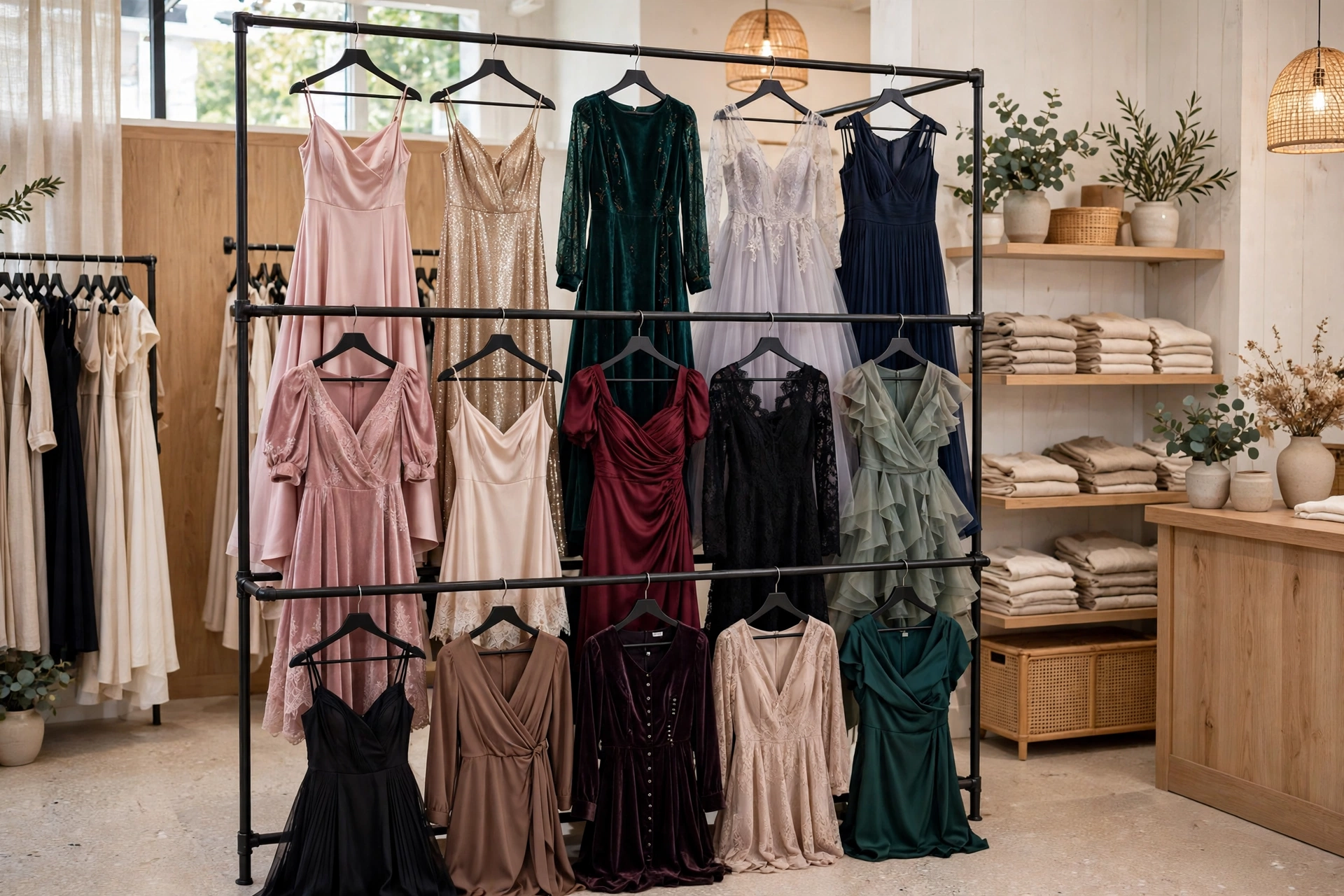
TutuPetti is a Vietnam-based manufacturer and wholesale supplier founded in 2009, specialising in princess, birthday, party, flower girl dresses and tulle gowns. Its wholesale online shop at tutupetti.net lists approximately 127 products for boutiques in the USA, Australia, UK and Europe.
Quick answer: TutuPetti wholesale tiers explained
TutuPetti wholesale tiers explained: Start Up, Scale Up, Glow Up — Start Up is the entry point for a boutique testing the range, Scale Up suits a boutique with proven sell-through that wants larger or more regular ordering, and Glow Up is the highest tier for a boutique ordering at greater scale. That is the direction of the tiers, not a set of published thresholds: qualifying amounts, order volumes, discount rates, MOQs per tier and tier benefits are confirmed directly with TutuPetti for your specific situation, not assumed from the tier names. Before choosing, evaluate every tier on landed cost, not unit price alone, and confirm in writing how upgrade, downgrade and re-qualification work after a slow season. TutuPetti usually needs 3–5 business days for preparation and 4–10 business days for international shipping, around 7–15 business days before customs delays; import duties are excluded and paid by the buyer.
In this guide: 1. Tiers and occasionwear | 2. Moving between tiers | 3. Landed cost before commitment | 4. Pre-choice checklist | FAQs
| Tier | Best for | Key question before choosing |
|---|---|---|
| Start Up | Testing the range, first or smaller-scale ordering | What MOQ, terms and landed cost apply at this level? |
| Scale Up | Proven sell-through, larger or more regular ordering | What changes in terms, and what does it require to maintain? |
| Glow Up | Greater scale ordering | What are the full requirements, benefits and renewal rules? |
1. How the tiers fit specialty occasionwear, not generic apparel
Generic wholesale tier advice assumes fast-moving basics: reorder the same styles constantly, in predictable sizes, with little seasonality. TutuPetti’s range does not behave like that. Princess, birthday, party and flower girl dresses are occasion-driven, seasonal and style-sensitive, and that changes how a tier should be judged.
For TutuPetti wholesale tiers explained: Start Up, Scale Up, Glow Up, a boutique buying occasionwear needs tiers that make sense for:
- Seasonal peaks. Wedding and party seasons create demand spikes, followed by quieter periods. A tier that only rewards steady monthly volume may penalise a boutique whose year is naturally uneven.
- Style breadth versus depth. Occasionwear buyers often need breadth — several styles and colours for different occasions — before they need depth in one style. A tier structure that forces depth too early can leave a boutique with unsold sizes.
- Size and colour spread. Tulle gowns and party dresses sell across a size range and in colour variations. The right tier question is not only “how much must I order?” but “how much must I order, in which sizes and colours, to qualify and to sell through?”
- Test-and-learn cycles. A new boutique may need to test which styles, colours and sizes sell in its local market before committing at scale. Start Up exists for that testing phase; its value is learning, not only discount.
Do not judge a tier by its name. Judge it by how it handles occasionwear reality: seasonality, breadth, size spread and sell-through risk. If a tier’s terms do not fit those realities, ask TutuPetti how they are handled before committing.
2. How moving between tiers works — and the slow-season question
The most important tier question is often the one buyers forget to ask: what happens when circumstances change? Tiers are usually described as a climb, but boutiques also face slow seasons, shifting local demand and cash-flow pressure.
Before choosing a tier, confirm in writing:
- Upgrade: What triggers an upgrade from Start Up to Scale Up, or Scale Up to Glow Up? Is it a single order, cumulative spend, order frequency, or a combination? Who confirms the upgrade, and when does it take effect?
- Downgrade: What happens if ordering falls below a tier’s level? Is there a grace period, a review, or an immediate drop?
- Evaluation and re-qualification: How often are tiers reviewed? Is re-qualification based on a season, a year, or cumulative history? What happens to accumulated status after a slow season?
- Benefits on movement: Do benefits change immediately on upgrade or downgrade, or at the next review period? Which benefits, if any, are tied to tier level at all?
This matters because of the “tier trap” fear: a boutique commits to a higher tier, has a slow season, and loses status or benefits it counted on. A tier system that is clear about evaluation, grace periods and re-qualification is safer than one that only promises upward movement. If TutuPetti’s answers to these questions are not yet in writing for your boutique, get them before you choose.
3. Evaluate every tier on landed cost, not unit price alone
Wholesale guides often discuss prices in isolation. For an overseas supplier, that is misleading. A lower unit price at a higher tier can still be the wrong choice if shipping, duties and other charges erase the saving — especially on smaller Start Up-level orders, where fixed shipping costs weigh more heavily per dress.
For TutuPetti wholesale tiers explained: Start Up, Scale Up, Glow Up, use this landed-cost formula for each tier you are considering:
Landed cost per dress = (product cost + international shipping + import duties and charges + other confirmed charges) ÷ number of dresses
Then compare tiers on the same basis:
| Cost element | Why it matters by tier |
|---|---|
| Product cost | The only element tier discounts directly affect, if a discount applies |
| International shipping | Fixed or semi-fixed per order; weighs more per dress on smaller orders |
| Import duties and charges | Excluded by TutuPetti and paid by the buyer; varies by destination |
| Other confirmed charges | Only charges confirmed in writing for your order |

TutuPetti usually needs 3–5 business days for preparation and 4–10 business days for international shipping, around 7–15 business days before customs delays. That timeline applies to ordering generally; confirm whether tier level affects preparation priority, if at all, rather than assuming it does.
A higher tier is only better if its landed cost per dress, after shipping and duties, beats the lower tier for the order sizes you actually place — and if you can sell through the quantities required to reach it. If the quantities needed to reach a higher tier create dead stock, the lower tier may be the more profitable choice.
4. Pre-choice verification checklist: what to confirm before choosing a tier
Do not choose a tier from its name, a website summary, or a general wholesale guide. Confirm each item below directly with TutuPetti, in writing, for your boutique:
- Qualifying threshold: what order volume, amount or frequency qualifies for Start Up, Scale Up and Glow Up, and how is it measured?
- MOQ: what minimum applies per order, per style and per colour at each tier?
- Discount or pricing: what pricing, if any, differs by tier, and for which products?
- Benefits: what benefits, if any, are tied to each tier — and which are available regardless of tier?
- Progression: how does a boutique upgrade, and when does the new tier take effect?
- Downgrade and renewal: how often are tiers reviewed, what happens after a slow season, and how is re-qualification handled?
- Samples: do sample terms differ by tier, and what sample price and fee terms apply?
- Shipping and duties: what shipping options, preparation windows and duty responsibilities apply to your destination?
- Size and colour rules: how do tier terms interact with size runs and colour choices for occasionwear?
- Contact and confirmation: who confirms your tier in writing, and where is that confirmation recorded?

Frequently asked questions
What are TutuPetti’s wholesale tiers?
TutuPetti’s wholesale tiers are named Start Up, Scale Up and Glow Up. Start Up is the entry point for testing the range, Scale Up suits proven sell-through with larger or more regular ordering, and Glow Up is the highest tier for greater-scale ordering. Specific thresholds, discounts and benefits are confirmed directly with TutuPetti.
Which tier should a new boutique choose?
A new boutique should normally start by testing the range and learning which styles, colours and sizes sell locally, rather than committing to the highest tier immediately. Confirm Start Up terms, MOQ and landed cost first, then consider moving up once sell-through is proven.
How do I move from Start Up to Scale Up or Glow Up?
Confirm the upgrade trigger in writing: whether it is a single order, cumulative spend, order frequency, or a combination, who confirms it, and when it takes effect. Do not assume an upgrade is automatic.
What happens if I have a slow season?
Ask how tiers are reviewed, whether there is a grace period, and how re-qualification works after a slow season. A clear answer on downgrade and renewal rules matters more than a promise of upward movement alone.
Do higher tiers always mean lower prices?
Not necessarily on a landed-cost basis. Compare tiers using landed cost per dress — product cost plus international shipping, buyer-paid import duties and other confirmed charges, divided by the number of dresses. A higher tier can be worse if its required quantities create dead stock.
Are tier benefits like priority production or dedicated support guaranteed?
No benefit should be assumed from a tier name. Confirm in writing which benefits, if any, are tied to each tier, including any custom labelling, shipping thresholds, production priority or support arrangements.
How do tiers work for occasionwear specifically?
Occasionwear is seasonal, style-sensitive and needs breadth across styles, colours and sizes before depth. Judge tiers by how they handle seasonality, size spread and sell-through risk, not by generic apparel volume logic.
What are TutuPetti’s preparation and shipping times?
TutuPetti usually needs 3–5 business days for preparation and 4–10 business days for international shipping, around 7–15 business days before customs delays. Confirm whether tier level affects these windows, if at all, rather than assuming it does.
Who pays import duties on TutuPetti wholesale orders?
Import duties are excluded and paid by the buyer. Duty rates and charges vary by destination and are not stated in this article, because none has been verified for publication.
What should I confirm before committing to a tier?
Confirm qualifying thresholds, MOQs per order, style and colour, pricing by tier, benefits, upgrade and downgrade rules, renewal periods, sample terms, shipping and duties, and size and colour rules — all in writing, for your specific boutique and destination.
Choose the tier that fits your sell-through, not just your ambition
TutuPetti wholesale tiers explained: Start Up, Scale Up, Glow Up is ultimately a question of fit. Start Up lets a boutique learn the range. Scale Up rewards proven sell-through. Glow Up supports greater scale. None of them should be chosen on name alone.
Browse designs in the TutuPetti shop, then contact the team via the About page with your boutique details, target market and typical order size, and ask for written confirmation of the tier terms that apply to you. Wholesale contact details listed there include the Zalo wholesale contact 0902 506 539 and email tutupetti@gmail.com as published on that page.
